How to Start a Cottage Food Business in Delaware: $30 DPH Registration, No Online Sales and the $50,000 On-Farm Route
How to Start a Cottage Food Business in Delaware: $30 DPH Registration, No Online Sales and the $50,000 On-Farm Route
Delaware allows home-based food producers to sell certain non-potentially hazardous foods directly to consumers under a Cottage Food Establishment (CFE) registration that costs $30 per year. But there's a critical catch: you cannot sell online. This guide walks you through the registration process, product rules, labeling requirements, and the alternative on-farm processing route that lets farmers sell up to $50,000 worth of processed foods annually from their home kitchen.
What Is a Delaware Cottage Food Establishment and Who Can Operate One?
A Cottage Food Establishment is a food business registered with Delaware's Department of Health and Social Services, Division of Public Health (DPH). You produce and sell specific non-perishable foods, breads, jams, cookies, fudge, and similar items, directly from your home kitchen to Delaware consumers only. You do not need a commercial kitchen, and you pay a flat $30 annual registration fee instead of the fees required for a full commercial food facility.
This registration is designed for small-scale producers. The rule does not specify an annual sales cap, though an earlier version capped sales at $25,000; that limit was removed in the December 2023 amendment. A revision of the rule was proposed in the February 2026 Register, so check with the Office of Food Protection for the final rule. However, there is a critical trade-off: you cannot sell online. You may advertise and market online, but all sales must be direct, in-person transactions with consumers in Delaware.
If you are a farmer who wants to process foods in your farm's home kitchen, the on-farm processing route through the Department of Agriculture may fit better. That route has a $50,000 sales cap and a separate permit process.
What Foods Can You Make and Sell?
Delaware's CFE rule limits you to non-time/temperature-control-for-safety (non-TCS) foods on the Division of Public Health's approved list. These are shelf-stable products that do not require refrigeration to prevent foodborne illness.
Allowed CFE products:
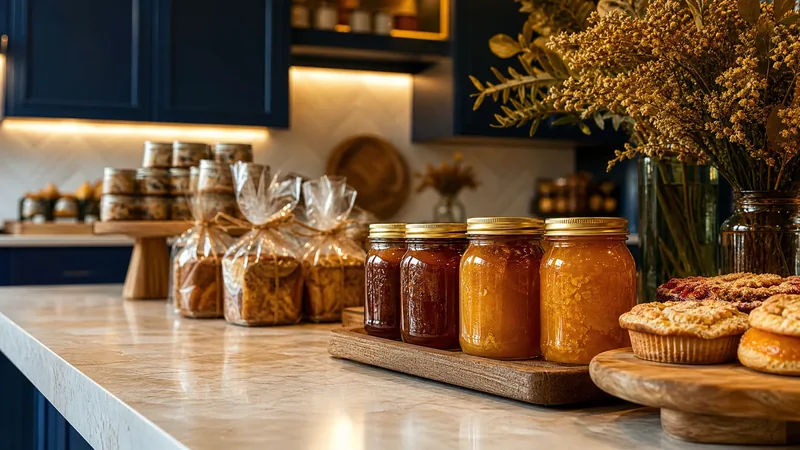
- Breads, cakes, cookies, rolls, muffins, brownies, pastries (without cream filling or meat)
- Fruit pies (no cream)
- Jams, jellies, fruit preserves
- Non-TCS candy: fudge, lollipops, chocolates, hard candy, rock candy
Products must be on the DPH-approved list at the time you apply. Your registration is valid for specific products only, so if you later want to add a new item (such as granola or herbal tea), you may need to amend your registration. Cottage food products may not contain cannabis.
Register Your Business with the Division of Revenue First
Most businesses also need a Delaware business license from the Division of Revenue, which is separate from your CFE registration. Craft makers selling under $1,000 a year are outside the retailer chapter, so ask the Division of Revenue whether a license applies to you.
Step 1: Apply for a Delaware Business License
- Go to the Delaware One Stop portal at onestop.delaware.gov.
- Select your business type. For a home-based food producer, you will likely fall under a food processor, manufacturer, or retailer category. Confirm the category and corresponding gross receipts tax rate with the Division of Revenue if you are unsure.
- Provide your home address as your business location. Delaware allows home-based businesses to operate from a residence.
- Pay the annual license fee. The fee depends on your license category; for example, food processors pay an annual fee of $75 per location. Check Delaware One Stop for your specific category.
- Maintain your license continuously. Licenses expire December 31 each year and must be renewed. Operating without a valid license carries a fine of up to $3,000 or up to two years in prison.
Your Division of Revenue license also means you will owe gross receipts tax on your sales. The tax rate varies by license category. Manufacturers pay 0.126% on gross receipts (with a $1,250,000 monthly deduction), and food processors pay 0.1991%. If you are classified as a retailer, the rate is 0.7468%. Contact the Division of Revenue to confirm your category and applicable tax rate before you begin operations.
Delaware has no state sales tax and does not issue seller's permits. Instead, you file and pay gross receipts tax monthly or quarterly (new businesses file quarterly) based on your license category.
Register Your Cottage Food Establishment with DPH
Once your Division of Revenue license is active, you can apply for your CFE registration with the Division of Public Health, Office of Food Protection.
Step 2: Prepare Your Kitchen and Documentation
- Inspect your kitchen. Your food production must take place in your permanent primary residence. Check that your kitchen meets CFE requirements:
- No carpet in the food prep area or dry storage areas.
- No pets are allowed in the kitchen during food production.
- If you use a private well, the water must pass a chemical and bacteriological test completed within 60 days before your application is submitted.
- Create a floor plan. Draw a floor plan of your kitchen. Ask the Office of Food Protection what it must show.
- Complete food safety training. Someone on site must pass a food safety program approved by the Office of Food Protection. Ask the Office which programs it approves, and keep your certificate.
- Prepare your product labels. Print sample labels for each product you plan to sell. Labels must include all required information (see the labeling section below).
Step 3: Submit Your CFE Registration Application
- Contact the Division of Public Health, Office of Food Protection, to request the CFE registration application form. You can reach them through the Delaware Department of Health and Social Services website or call to confirm the current application process.
- Complete the application, including:
- Your name, address, and contact information.
- Each specific product you plan to produce and sell.
- Your floor plan.
- Proof of food safety training (copy of your certificate).
- Sample product labels.
- If you use well water, proof of bacteriological and chemical testing completed within 60 days.
- Submit the application along with the $30 registration fee. Confirm the current payment method with the Office of Food Protection.
- Schedule an on-site inspection. An inspector will visit your home kitchen to verify that it meets CFE requirements and that your production process is safe for the products you plan to make. As the required label statement says, cottage food establishments are not subject to routine government food safety inspections, unlike commercial kitchens.
- After inspection approval, you will receive your CFE registration. It is valid for one year from April 1 to March 31 (or from the date of issue through March 31 of that year if registered mid-year).
Step 4: Renew Your Registration Annually
Your CFE registration expires March 31 each year. To continue operating, submit a new application and pay the $30 renewal fee. If the Division of Public Health updates the CFE rule during your registration period, check whether your kitchen and products remain compliant.
Labeling Requirements: What Your Labels Must Say
Every package of food you sell must carry a label with all required information, printed in at least 10-point type so it is easily readable.
Your label must include:
- The name of your Cottage Food Establishment (typically your business name).
- The product name (e.g., "Chocolate Chip Cookies").
- Town and state (e.g., "Made in Wilmington, Delaware").
- Your phone number or email address.
- Net weight or count (e.g., "12 oz" or "12 cookies").
- Production date or lot number (so you and the buyer can track each batch).
- A complete ingredient list in descending order by weight.
- Any major allergens (peanuts, tree nuts, milk, eggs, soy, wheat, etc.) clearly labeled.
- This required statement: "This food is made in a Cottage Food Establishment and is NOT subject to routine Government Food Safety Inspections."
Labels help you track which batches you made, when, and to whom you sold them. If a customer reports a problem, you can identify the batch quickly. Failure to label correctly is a compliance violation.
Record-Keeping: Batch Records and Retention
You must keep batch records for all products you make. A batch record documents what you made, when, the ingredients used, the production date, and where it was sold (or to whom, if sold directly).
Batch record requirements:
- Keep records for at least 3 years.
- Include the production date or lot number, ingredients used, and quantities.
- Store records in a location where you can access them quickly if the Office of Food Protection requests them or if a customer reports a problem.
Batch records are essential if you need to trace a product back to its production run. They also help you manage inventory and identify which recipes or practices work best.
The Critical Limitation: No Online Sales
This is the most important rule to understand: you cannot sell your products online. You cannot ship orders to customers, operate a website sales store, or use online marketplaces such as Etsy, Facebook Marketplace, or similar platforms for sales transactions.
You may use online marketing and social media to advertise your business, post photos, tell customers where to find you in person, and build your brand. But the actual sale must occur face-to-face in Delaware.
Your customers can buy directly from you at:
- Your home (if you allow customers to visit).
- Farmers' markets and local events in Delaware.
- Farm stands or direct pickup locations.
- By cash or check at point of sale.
If you want to sell online or ship products across state lines, you must use a licensed commercial kitchen and meet FDA and interstate commerce requirements. That is a different business model with much higher setup costs and regulatory complexity.
What Your CFE Registration Does NOT Cover
CFE registration is focused and limited. It does not waive other state, county, or local codes. Be aware of these exceptions:
- Bake sales and private events are exempt from the CFE registration requirement; ask the Office of Food Protection how it defines them.
- Municipal licensing: Some Delaware municipalities require an additional local food business permit or license. Check with your city or county to see if any additional local permits apply.
- Zoning: Confirm that running a home food business does not violate your local zoning rules. Some residential areas prohibit commercial activity, even small-scale home businesses.
- Homeowners association rules: If you live in a community with a homeowners association, check your covenants to ensure a home food business is allowed.
The Alternative: On-Farm Processing Under the Department of Agriculture
If you are a farmer and want to process and sell a wider range of foods, the Delaware Department of Agriculture offers a separate on-farm home processing program. This route allows you to sell up to $50,000 in processed products annually from your home kitchen.
On-Farm Processing Key Points:
- You must be a farmer in your farm's home kitchen.
- You need a Department of Agriculture permit (contact the Department of Agriculture to confirm the current permit fee and application process).
- You must complete Cooperative Extension training.
- The sales cap is $50,000 per year.
- Contact the Delaware Department of Agriculture for specific rules, products allowed, and the permit application process.
Farm owners selling only unprocessed products directly from their farm (apples, vegetables, eggs, raw honey) fall outside the retailer chapter of the gross receipts law (30 Del. C. 2909(a)). Craft makers selling under $1,000 per year are also exempt from the retailer licensing chapter. Confirm your situation with the Department of Agriculture or Division of Revenue.
Common Mistakes to Avoid
Trying to sell online: The no-online-sales rule is absolute under the CFE program. If you want to ship products or operate an online store, you cannot use the CFE route. You would need a commercial kitchen, FDA compliance, and interstate commerce permits.
Using non-approved products: Your registration covers only the specific products DPH approved at the time you applied. Adding a new item (even if it is similar, such as adding almond cookies when you registered for chocolate chip cookies) may require you to amend your registration or reapply. Always ask DPH before producing a new product.
Skipping the business license: Delaware generally requires a Division of Revenue business license, and operating without one carries a fine of up to $3,000 or up to two years in prison. Ask the Division whether you qualify for an exception.
Forgetting the label statement: The statement "This food is made in a Cottage Food Establishment and is NOT subject to routine Government Food Safety Inspections" must appear on every label. Missing this statement is a violation.
Not keeping batch records: If a customer reports a problem, batch records are your only way to identify which run was affected and whether other customers may be at risk. Lack of records also leaves you vulnerable if DPH investigates a complaint.
Underestimating gross receipts tax: Cottage food producers owe gross receipts tax on their sales revenue. Plan for this ongoing cost and file your tax returns on time (monthly or quarterly, depending on your license category). Failure to pay can result in penalties, interest, and possible loss of your business license.
Expected Results and Timeline
Once your registration is approved, you can begin making and selling products immediately, subject to these conditions:
- Sales are direct and in-person only (no online or shipped orders).
- You sell only to consumers in Delaware.
- You sell only the products listed on your CFE registration.
- Every package is labeled with all required information.
- You keep batch records for at least 3 years.
- You maintain your Division of Revenue business license and pay gross receipts tax.
- You renew your $30 CFE registration each year by March 31.
The registration itself does not grant you a sales guarantee or customer base. The actual success of your business depends on your product quality, local demand, your ability to reach customers (through farmers' markets, word-of-mouth, local events), and consistent execution. The CFE program simply allows you to operate legally from your home kitchen at a much lower cost than a commercial facility.
Legal and Tax Disclaimer
This article provides informational guidance on Delaware's Cottage Food Establishment registration process and related state business licensing. It is not legal advice, tax advice, or a substitute for professional consultation. Food business rules, fees, and regulatory requirements change. Always verify current requirements with the authoritative agencies:
- CFE Registration and Food Safety: Delaware Division of Public Health, Office of Food Protection
- Business Licensing and Gross Receipts Tax: Delaware Division of Revenue (onestop.delaware.gov or the Department of Finance website)
- On-Farm Processing: Delaware Department of Agriculture
- Local Permits and Zoning: Your city or county government
For tax treatment of your business income, the structure of your business (sole proprietorship, LLC, corporation), and whether there are state or federal deductions or credits available to food businesses, consult a qualified accountant or tax professional licensed in Delaware. For interpretation of food safety rules or questions about whether your specific products, kitchen setup, or sales arrangements comply with the rule, consult the Office of Food Protection directly or consider consulting a food safety attorney.
The information in this article was researched and verified against Delaware state regulations, the Delaware Code, and official state agency resources as of October 2026. Regulations change; always check the state agency websites for updates before you apply.
Keep exploring: related Delaware guides
- How to Start a Coffee Shop Business in Delaware
- How to Start a Food Truck Business in Delaware
- How to Start a Catering Business in Delaware
- How to Start a Brewery, Distillery or Winery in Delaware
- How to Start an LLC in Delaware
- Delaware Business License
- How Much Does It Cost to Start a Business in Delaware
- All Delaware business types
- Every Delaware guide in one place