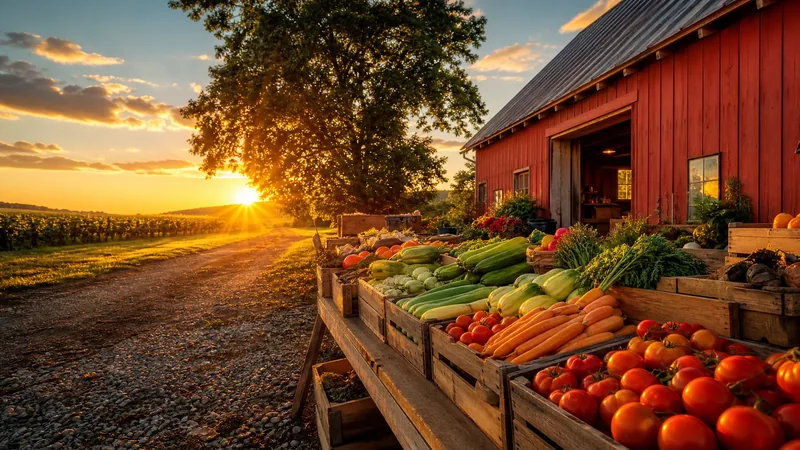
How to Start a Farm Stand or U-Pick Business in Delaware: The Gross Receipts Tax Exemption for Unprocessed Farm Products and Where Processed Goods Differ
How to Start a Farm Stand or U-Pick Business in Delaware: The Gross Receipts Tax Exemption for Unprocessed Farm Products and Where Processed Goods Differ
Delaware's agricultural landscape is friendly to farm direct-to-consumer sales, but only if you understand the state's gross receipts tax system and which products qualify for exemptions. This guide walks you through the exact steps to launch a farm stand or U-Pick operation in Delaware, navigate licensing requirements, and determine whether your products trigger tax obligations.
Understanding Delaware's Farm Product Tax Exemption
Delaware has no sales tax. Instead, the state charges a gross receipts tax on businesses based on their license category. This distinction matters enormously for farm operators.
Under Delaware Code Title 30, Chapter 29, section 2909(a)(1)a, a farm or nursery owner who sells unprocessed agricultural products that the farm produced is exempt from the retailer and wholesaler gross receipts tax. This is the core exemption that makes farm stands economically viable in Delaware.
Unprocessed agricultural products include fresh produce and nursery or floral products such as cut flowers and plants. If you grew it or raised it on your farm, you do not owe the gross receipts tax on those sales, regardless of revenue.
However, this exemption applies only to products your farm produced. If you purchase unprocessed goods from other farms to resell, those receipts count toward the $100,000 monthly threshold under section 2905(b). Once those receipts exceed that amount in a single month, you need a license under the retailer chapter and owe gross receipts tax; confirm how it applies to you with the Division of Revenue. At or below that amount, you do not need a chapter 29 license for those sales.
Step 1: Decide Your Business Structure and Register Your Entity
Before you open, choose whether to operate as a sole proprietor, an LLC, or a corporation. This is a business formation decision separate from obtaining a business license.
Sole Proprietorship: The simplest option. No filing required with the Delaware Division of Corporations. You operate under your personal name or register a trade name (DBA) for $25 with the Division of Revenue through Delaware One Stop.
Limited Liability Company (LLC): Costs $110 to form with the Delaware Division of Corporations (eCorp Document Upload Service at https://icis.corp.delaware.gov/ecorp2). An LLC provides liability protection and is simpler to maintain than a corporation. Starting in 2027, an LLC owes a flat annual tax of $400 due June 1 each year (check https://corp.delaware.gov for the current amount and any changes). Confirm the current tax amount and due date before filing, as this changed in 2026.
Corporation: Costs $109 to form. Corporations must file an Annual Franchise Tax Report by March 1 each year and pay a franchise tax. This is more expensive and complex than an LLC for a farm stand, so most farm operators choose LLC or sole proprietorship.
For a DBA or LLC name, search availability at https://icis.corp.delaware.gov/Ecorp/EntitySearch/NameSearch.aspx. You may reserve a name for 120 days for $75 if you want time to prepare your filing.
Step 2: Obtain Your Delaware State Business License
Every person or entity conducting a trade or business in Delaware must obtain a state business license from the Division of Revenue. This is separate from entity formation. A farm selling only unprocessed products it produced is outside the retailer and wholesaler chapter (30 Del. C. 2909), so check with the Division of Revenue which license, if any, applies to your operation.
Apply through Delaware One Stop at https://onestop.delaware.gov. You will apply for a general retail, food processor, or other category depending on what you sell.
License Fees and Categories:
- General Retailers: $90 annually (includes a $15 retail crime fee). This applies to a farm stand that resells purchased goods as a retailer; check with the Division of Revenue.
- U-Pick: check with the Division of Revenue how it classifies a U-Pick operation and which license fee applies.
- Food Processors: $75 annually (if you process goods on-site; see the processed goods section below).
- Additional Locations: $25 per additional farm stand or U-Pick site.
Licenses run one year and expire December 31. The first-year fee is prorated by full calendar months if you apply mid-year. Operating without a license carries a fine of up to $3,000 or up to two years in prison, so do not skip this step.
Step 3: Understand Your Gross Receipts Tax Obligation (or Exemption)
Once you have your business license, you are subject to a gross receipts tax based on your license category, unless you qualify for an exemption. Here is how it works for farm stands:
If you sell only farm-produced unprocessed products: You are exempt from the gross receipts tax under section 2909(a)(1)a. You owe $0 in gross receipts tax regardless of revenue. This is the strongest position.
If you resell purchased unprocessed products: You do not need a chapter 29 license for those sales as long as total resale receipts stay at or below $100,000 per calendar month. Above that, you need a retailer license, and the retail rate is 0.7468% after the $100,000 monthly deduction; confirm with the Division of Revenue.
If you sell farm-produced unprocessed products and resell purchased unprocessed products: Your farm-produced sales are always exempt. Only the resale receipts count toward the $100,000 monthly threshold.
If you resell goods and are a "retailer": A farm stand that buys and resells processed goods, packaged items, or merchandise beyond unprocessed agricultural products is classified as a retailer. Confirm your exact status with the Division of Revenue (https://revenue.delaware.gov) before you assume an exemption.
Step 4: Register for Municipal Zoning and Agritourism Rules
Delaware has 3 counties and 57 incorporated municipalities, each with different zoning and licensing rules. A farm stand or U-Pick operation may require:
- County Zoning Approval: Contact your county planning office to confirm that agricultural retail sales are permitted on your property. Some residential or commercial zones restrict farm stands.
- Agritourism Zoning: If you offer U-Pick, farm tours, or other agritourism activities, your operation may fall under local agritourism regulations. Check with your county planning office and the Delaware Department of Agriculture (https://dda.delaware.gov) for liability and insurance requirements specific to your area.
- Home Occupation License: If you operate from a residential property, some municipalities require a home occupation permit. Contact your city or county clerk.
Do not assume a statewide agritourism liability statute protects you. Liability rules vary by county and municipality. Obtain appropriate liability insurance for your operation and confirm local requirements before opening.
Step 5: Distinguish Between Unprocessed and Processed Farm Products
The tax exemption applies only to unprocessed products. If you make jams, baked goods, pickles, dried herbs, or other processed items, different rules apply.
Incidental Processed Sales: Under section 2909(a)(2), a farm owner may make incidental sales of processed farm products to consumers without triggering the retailer tax. However, "incidental" is not defined in statute. The Division of Revenue interprets this on a case-by-case basis. If you sell small quantities of homemade jam alongside fresh produce, you likely qualify. If you operate a commercial bakery, you do not.
Cottage Food Operations: Delaware has a cottage food route for certain foods made in a home kitchen, handled through the Division of Public Health and the Department of Agriculture. See our cottage food guide for the rules, and check with the Division of Public Health for the current list of permitted foods and labeling requirements.
Commercial Processing: If you process goods in a commercial kitchen (not a home kitchen), you need a Food Processor's license ($75 annually) and must comply with health and safety regulations. Any revenue from processed goods sold under a Food Processor license is subject to the gross receipts tax at the food processor rate of 0.1991%. This is substantially lower than the retail rate of 0.7468%, which is why some operators separate unprocessed and processed operations.
Clear Labeling and Record-Keeping: Keep receipts and sales records that distinguish unprocessed from processed sales. The Division of Revenue may audit your books to verify exemption claims, so accurate tracking is essential.
Step 6: Set Up Operations and Marketing
Once licenses and zoning are approved, set up your farm stand or U-Pick site:
- Choose a Location: Confirm the location complies with local zoning. Roadside stands, on-farm stands, and U-Pick fields all have different zoning requirements.
- Build or Outfit Your Stand: A simple open-air stand with a cash box, scale, and signage is enough to start. Consider weather protection (canopy or shed) and a secure cash handling system.
- Create Pricing and Inventory System: Decide whether to price per pound, per basket, or flat rate. For U-Pick, decide whether customers pick and pay, or pay first and pick. Track inventory daily to ensure fresh stock.
- Post Signage: Clearly display your business name, hours, payment methods accepted, and any required health notices (especially if selling eggs or dairy). Include your DBA or business registration name if relevant.
- Establish Hours: Consistent, posted hours build customer trust. Note hours on your business license application if required by your municipality.
- Advertise Locally: Use social media, local farm networks, and farmers' market listings to drive traffic. Delaware's farming communities are well-connected; word-of-mouth is powerful.
Step 7: File and Pay Taxes on Schedule
Even if you are exempt from gross receipts tax, you have ongoing obligations:
- Sole Proprietors and Exempt Farm Stands: If you are exempt from gross receipts tax, you do not file monthly or quarterly gross receipts tax returns. However, confirm your exemption in writing from the Division of Revenue to avoid audits.
- Non-Exempt Retailers and Food Processors: File gross receipts tax returns monthly or quarterly (new businesses file quarterly), with a monthly exclusion of $100,000 ($300,000 quarterly). The tax is calculated on receipts above the exclusion.
- LLC Annual Tax: If you formed an LLC, pay the annual tax by June 1 each year (currently $400, but confirm the current amount at https://corp.delaware.gov).
- Business License Renewal: Renew your business license every December 31. You can apply for a three-year license at three times the annual fee if preferred.
- Registered Agent (if LLC or Corporation): Maintain a registered agent with a physical Delaware address. This can be you if you live in Delaware, or a registered agent service. A change of registered agent costs $50.
Common Mistakes to Avoid
Assuming No License Is Required: The farm exemption covers only unprocessed products your farm produced. A farm stand that resells purchased goods, or sells processed items beyond incidental sales, is a retailer or other licensed business. Operating without a required license can bring a fine of up to $3,000 or up to two years in prison.
Mixing Unprocessed and Processed Sales Without Tracking: If audited, you must prove which sales were exempt and which were not. Sloppy record-keeping can cost you thousands in back taxes and penalties.
Reselling Above the $100,000 Monthly Threshold Without Realizing It: If you resell purchased unprocessed products and exceed $100,000 in receipts in a single month, you owe tax on the excess. This can happen faster than expected during peak season. Monitor your sales closely.
Skipping Zoning Approval: Operating without local zoning approval can result in a cease-and-desist order. Confirm municipal rules before investing in your stand.
Not Verifying Exemption Status in Writing: Call or email the Division of Revenue (https://revenue.delaware.gov) with your specific business model and ask for written confirmation of your tax status. This protects you if you are audited.
Offering Processed Goods Without Understanding the Rules: If you make jams, baked goods, or other processed items, confirm they qualify under cottage food rules or require a commercial license. Selling unlicensed processed foods can trigger health department enforcement.
Expected Results and Timeline
Timelines vary with your location and the licenses you need. Rough planning categories:
- Entity formation (LLC or DBA): varies; the Division of Corporations publishes no standard turnaround
- Business license application (online), if one applies to you: check with the Division of Revenue
- Zoning and municipal permits: varies by location
- Stand construction and setup: depends on your design
Revenue depends on location, season, and product mix. Seasonal demand also shapes sales, so plan for busier and slower periods.
Resources and Next Steps
- Delaware Division of Revenue (Business Licensing and Gross Receipts Tax): https://revenue.delaware.gov | Delaware One Stop: https://onestop.delaware.gov
- Delaware Division of Corporations (Entity Formation): https://corp.delaware.gov | eCorp: https://icis.corp.delaware.gov/ecorp2
- Delaware Department of Agriculture: https://dda.delaware.gov | Agritourism and zoning guidance
- Delaware Division of Public Health (Cottage Food): Check with the Division of Public Health, Office of Food Protection, for food safety rules
- Delaware Small Business Development Center (SBDC): https://delawaresbdc.org | Free business planning and mentoring
- Your County Planning Office: Zoning and agritourism rules
Important Disclaimer
This article is informational only and does not constitute legal or tax advice. Delaware tax law and municipal regulations are complex and change frequently. Before opening your farm stand or U-Pick operation, consult with a Delaware-qualified attorney, a CPA familiar with agriculture and Delaware gross receipts tax, and your county planning office. Rules about processed foods, exemptions, and liability vary by location and product. Verify all requirements with the appropriate Delaware state agency and your municipality before you begin operations.
The gross receipts tax exemption for farm-produced unprocessed products is powerful, but it applies only if you meet specific criteria. Understanding where your operation fits within Delaware law is the foundation of a successful, compliant farm business.